Telehealth is now routine in outpatient behavioral health, but the claim details still trip teams up. The same video session can need a different POS and modifier depending on where the patient was and which plan you're billing. When an RCM team handles several clinics, that turns into a small matrix that someone needs to own.
Educational content from the AiMediCoder editorial team. It is not coding, billing, clinical or legal advice. Code definitions and payer rules change; confirm the current CPT definitions, CMS guidance and each payer's written policy before you bill. Clinic names in examples are fictional.
POS 02 vs POS 10 at a glance
Both codes come from the CMS place of service code set. [1]
| POS 02 | POS 10 | |
|---|---|---|
| Official name | Telehealth provided other than in patient's home | Telehealth provided in patient's home |
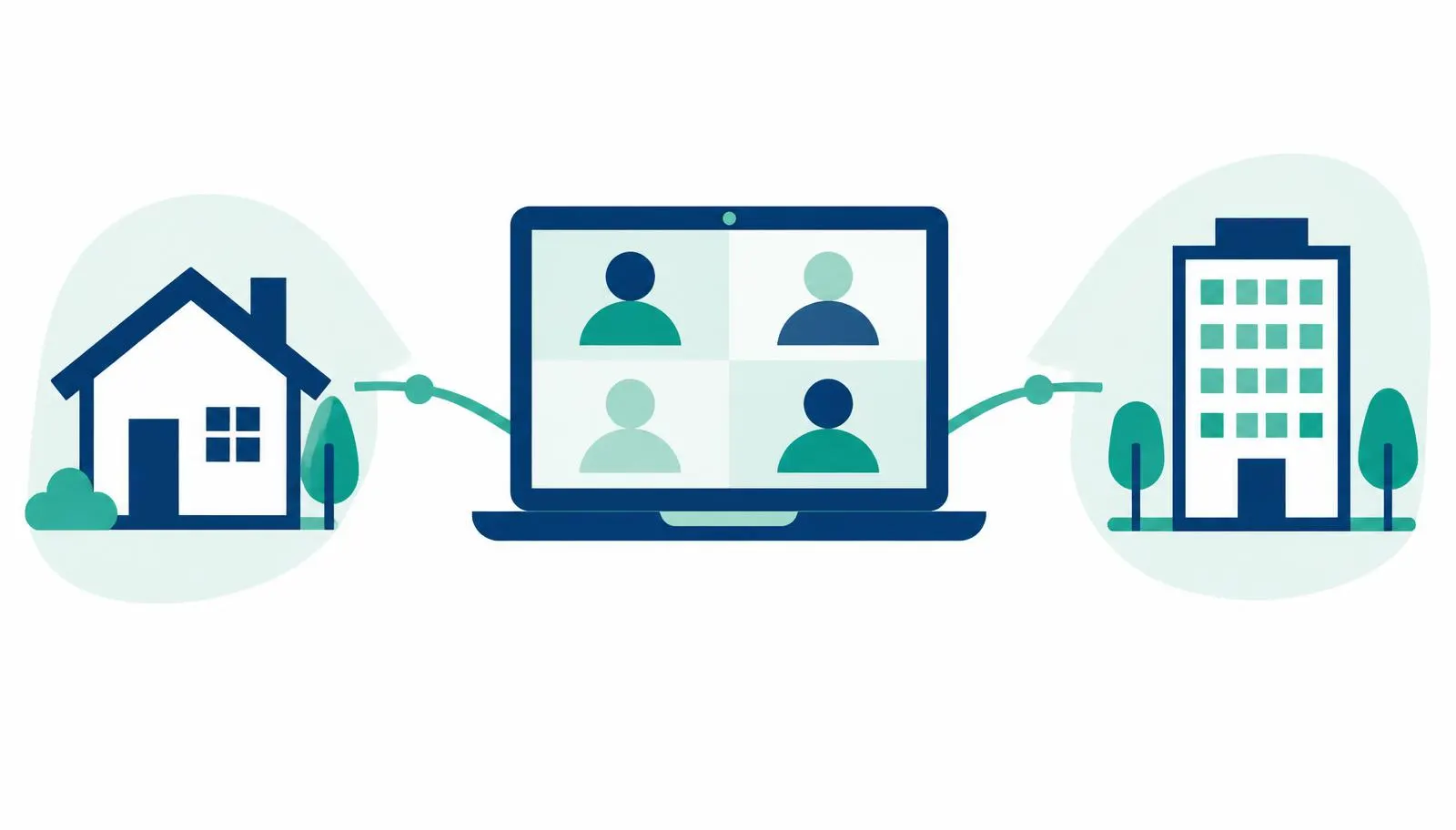
| Patient is located | Clinic, hospital, school or other non-home site | Their home — a private residence, not a hospital or other facility |
| Decided by | Patient's location | Patient's location |
The provider's location does not decide the POS. A therapist working from home who treats a patient in a clinic office still points to POS 02.
Where modifiers come in
| Modifier | Meaning | Where you'll see it asked for |
|---|---|---|
| 95 | Synchronous telemedicine via real-time audio and video | Many commercial and Medicaid plans; Medicare in some situations |
| 93 | Synchronous telemedicine via audio-only | Payers that cover audio-only and follow CPT modifiers |
| FQ | Service furnished using audio-only communication | Older Medicare audio-only modifier. CMS has moved toward 93 — from 1 October 2026, RHCs and FQHCs report telehealth with 93 or 95. Use FQ only if a payer still asks for it |
| GT | Older interactive telecommunication modifier | A few plans still request it; confirm before using |
HHS and CMS publish current Medicare telehealth billing guidance, and it has changed several times since 2020. [2] [3] Treat any "always use 95" rule you inherited as something to re-check, not a fact.
Medicare vs commercial: why they differ
- Medicare sets telehealth rules through annual payment rules and temporary extensions. Behavioral and mental health services have had broader home-based telehealth access than many other services, and HHS states that home-based and audio-only behavioral telehealth in Medicare are now permanent, with the in-person visit requirement not applied through 31 December 2027. Check the CMS telehealth page for the date of service. [3]
- Commercial and Medicaid plans publish their own policies. Two plans in the same state can disagree on POS, modifier and audio-only coverage.
- Payment can differ by POS. Some payers pay POS 02 and POS 10 at different rates. That is a reason to get the location right, not to pick the code with the higher rate.
A worked example (fictional)
"Riverbend Behavioral" sees three telehealth patients on one afternoon:
| Session | Patient location | Delivery | Claim setup to verify |
|---|---|---|---|
| A — 90834 | Home | Video | POS 10; modifier 95 if the plan requires it |
| B — 90837 | School counselor's office | Video | POS 02; modifier per plan policy |
| C — 90832 | Home | Phone only | POS 10; 93 or FQ per payer, if audio-only is covered |
The note for each session should record the patient's location, the delivery method and, for audio-only, why video wasn't used where the payer asks for that.
How to stop telehealth denials before they start
- Capture patient location and delivery method in the note or intake for every telehealth session.
- Keep a one-page POS and modifier table per payer, per client account, with the date you last checked it.
- Set claim checks that flag telehealth claims missing the payer's expected POS or modifier.
- When denials come back, read the CARC and RARC together. Modifier and POS problems often show as CO-4, CO-5 (place of service inconsistent with the procedure) or CO-16; see our CARC guide.
- Re-check payer policies when a new year's payment rule takes effect.
Time rules don't change for telehealth. For choosing between 90834 and 90837, see 90837 vs 90834 billing guidelines. The RCM glossary covers other terms used here.
Frequently asked questions
What is the difference between POS 02 and POS 10?
POS 10 is telehealth provided in the patient's home. POS 02 is telehealth provided somewhere other than the patient's home, such as a clinic or another facility where the patient is located.
Do I still need modifier 95 for telehealth?
It depends on the payer and the year. Many commercial and Medicaid plans still ask for modifier 95 on synchronous video visits, and Medicare's instructions have changed several times. Check the payer's current telehealth policy.
Which modifier is used for audio-only therapy?
CPT modifier 93 identifies audio-only services. Medicare now generally uses 93 for audio-only telehealth, including for RHCs and FQHCs from 1 October 2026. FQ is an older Medicare modifier that some payers may still request. Whether audio-only therapy is covered at all depends on the payer.
Is the patient's location or the provider's location used to choose POS?
The patient's location. POS 10 means the patient was at home; POS 02 means the patient was somewhere other than home. The provider's location does not decide between the two.
Does telehealth change the CPT code for therapy?
No. The psychotherapy code is still chosen by documented time. Telehealth changes the place of service and possibly the modifier, not the time ranges.
Sources
- CMS — Place of Service code set
- HHS Telehealth.hhs.gov — Billing and reimbursement
- CMS — Medicare telehealth
Last reviewed 24 October 2026.